To most people, lambs mean spring: bouncing about in the fields and looking impossibly cute. They are. But behind every lamb in a field is a farmer who has probably had very little sleep for weeks. Lambing is the most rewarding time of year on a sheep farm, and the most exhausting.
Why lambs arrive in spring
It starts months earlier. The rams go in with the ewes in the autumn, and a ewe carries her lamb for about five months. Farmers time it so the lambs are born just as the grass starts growing again. The mothers then have plenty to eat, which means plenty of milk.
Before lambing, many farms have the ewes scanned, just like a baby scan. It tells the farmer which ewes are carrying one lamb, twins or triplets, so they can feed them accordingly and know who needs watching most closely.
What’s happening in the shed
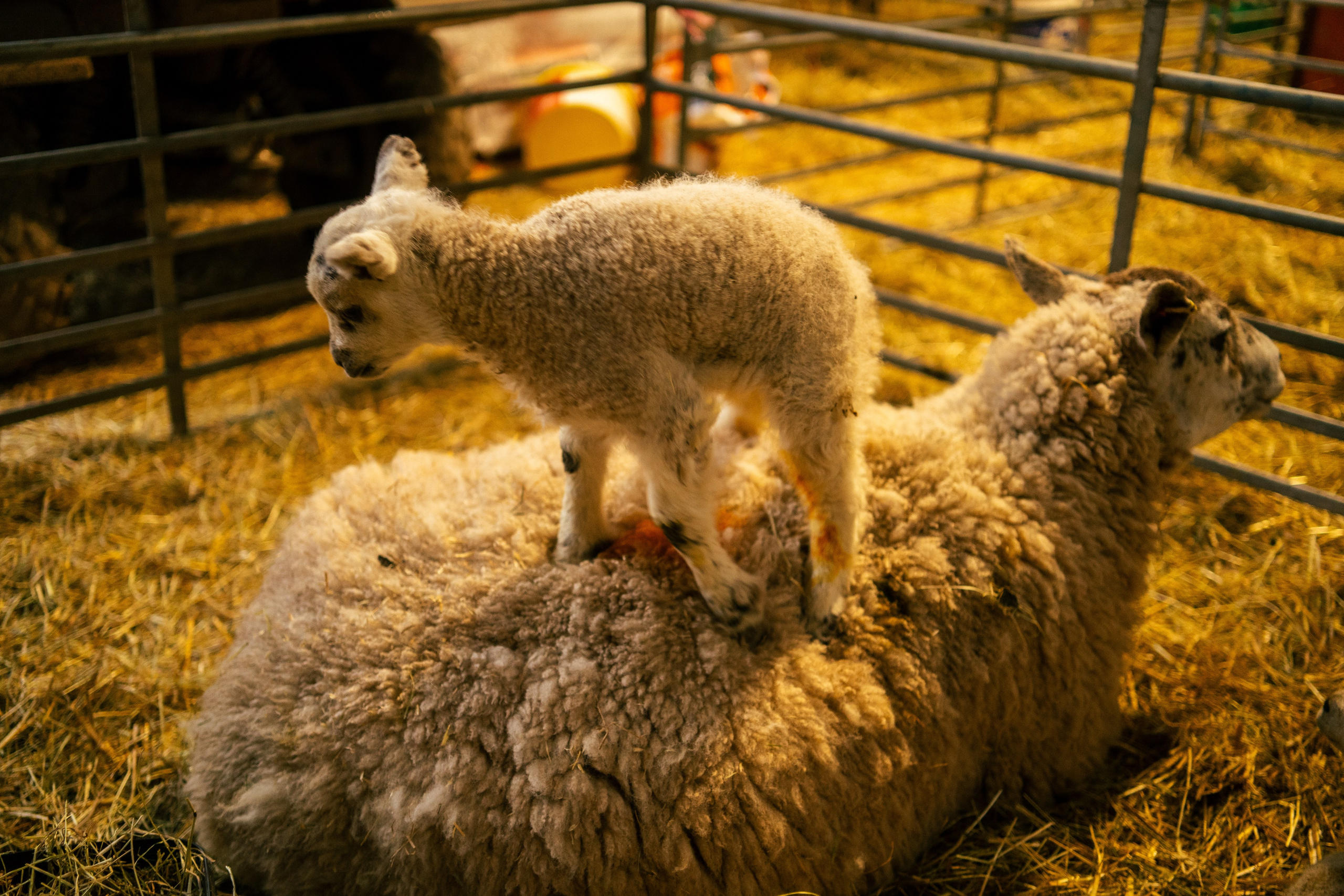
Many ewes give birth in a shed, or are brought in straight afterwards. Each new family goes into its own small pen for a day or two. That gives the ewe and her lambs time to bond, and gives the farmer a chance to check that every lamb is feeding.
That first feed is the most important meal of a lamb’s life. The first milk, called colostrum, is packed with antibodies that protect the lamb until its own immune system gets going. A lamb that doesn’t get enough in its first few hours is in real danger.
Why it’s tough
- It’s round the clock. Ewes don’t wait for daylight. At the height of lambing, farmers check the flock every few hours, day and night, for weeks.
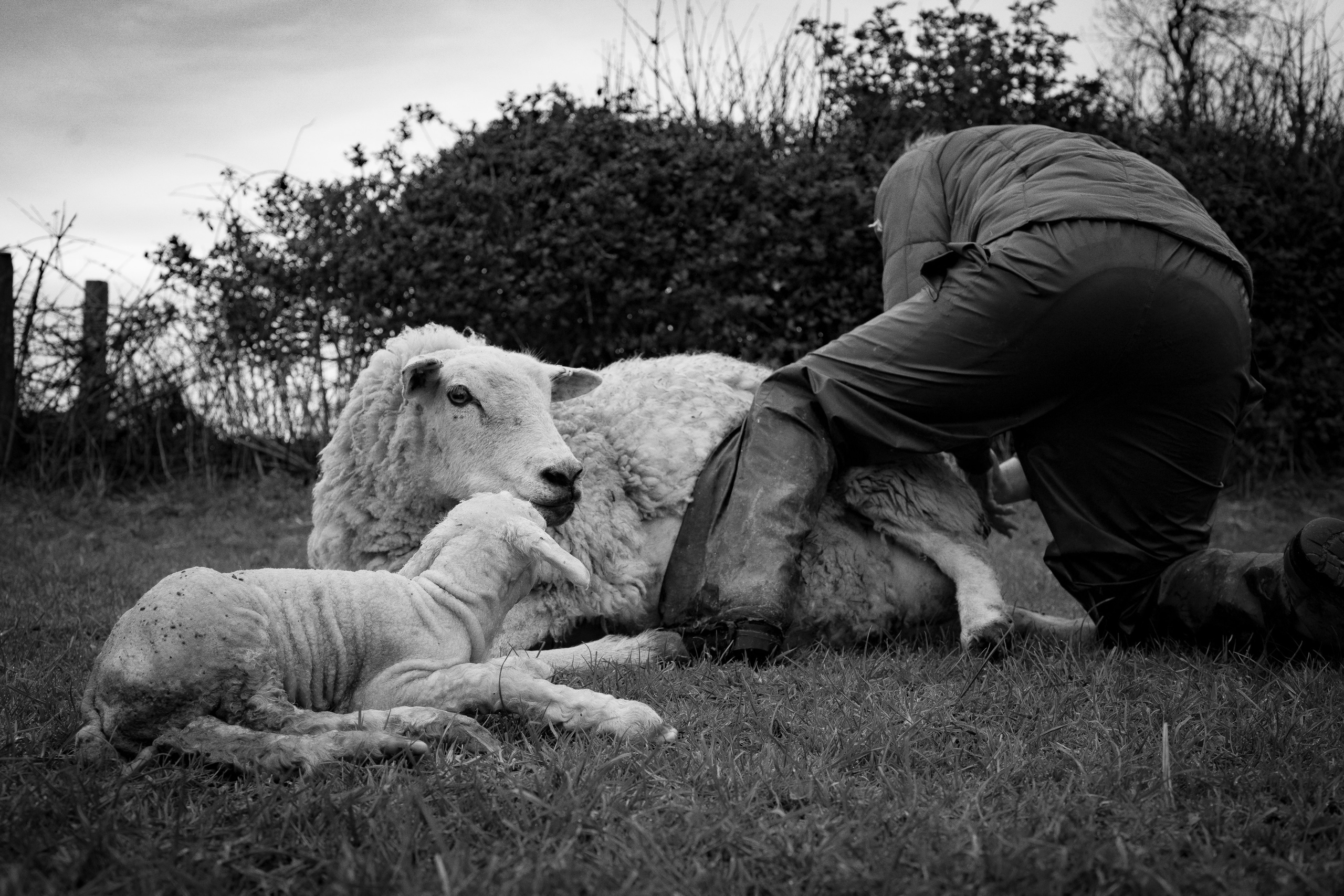
- Some births need help. A lamb might be coming the wrong way, or be too big. The farmer often has to step in, and being quick can save both the ewe and the lamb.
- The weather is a killer. A newborn lamb is wet and small. A cold, wet, windy night can take lambs that were perfectly healthy an hour earlier.
- Not every ewe can cope. A ewe with triplets may not have enough milk for three, and some mothers reject a lamb. Those lambs are fostered onto another ewe or bottle-fed by hand.
Out into the field
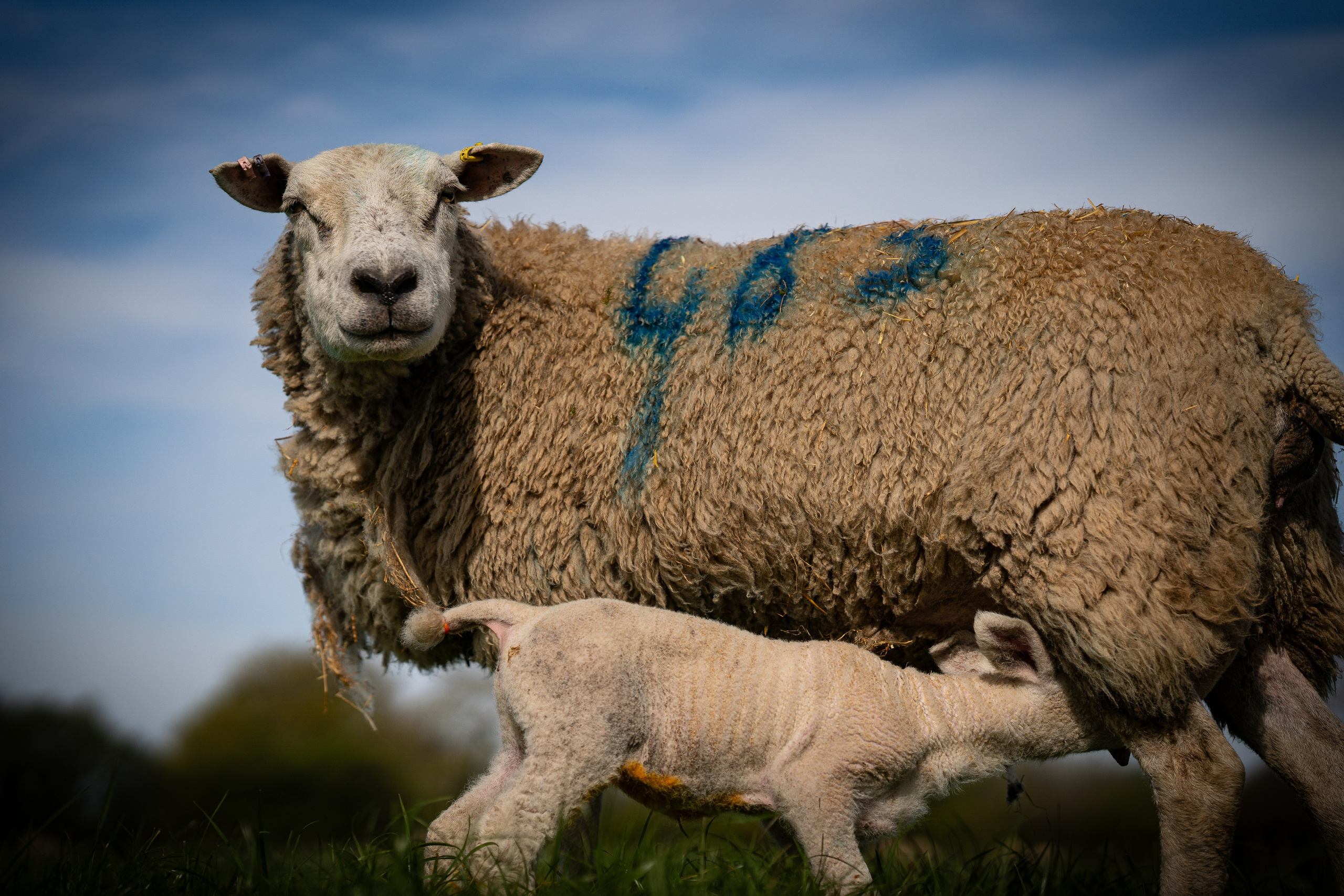
Once the lambs are strong and feeding well, the families head out to the fields. Before they go, the ewe and her lambs are sprayed with the same number. If a lamb gets separated or is poorly, the farmer can see at a glance which mother it belongs to.
Did you know?
A healthy lamb usually tries to stand within minutes of being born, and is often up and feeding within the hour. It’s one of the best things I’ve been lucky enough to photograph.


