Shearing is hot, sweaty, noisy work, and it’s one of the most skilled jobs I’ve watched on a farm. From the outside it looks like a sheep having a haircut. Up close, it’s more like watching an athlete.
What’s happening here
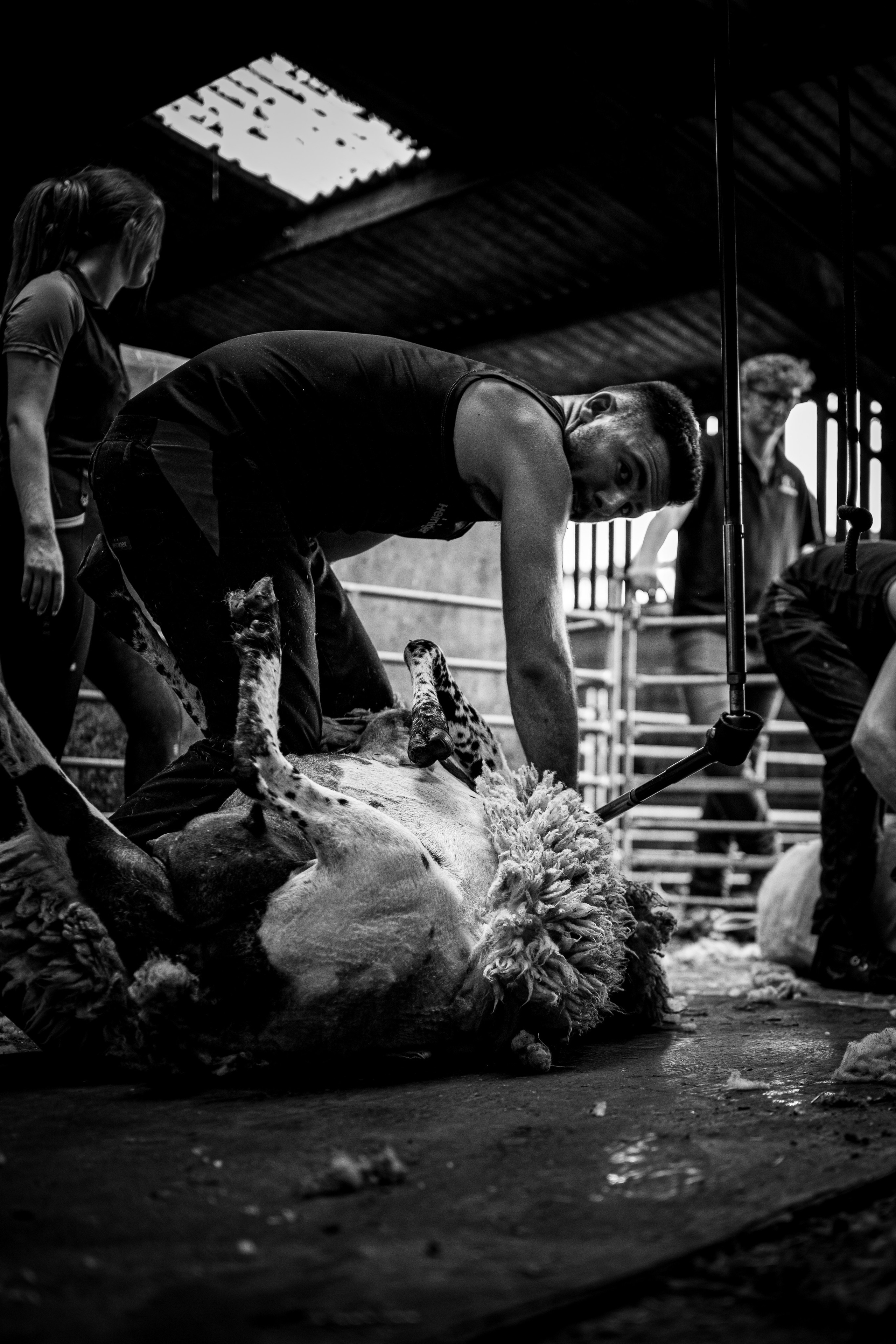
The shearer takes a sheep from the pen and sits it up on its bottom. In that position, most sheep go calm and still. Then he works around the body with electric clippers in long, smooth strokes, moving the sheep with his legs and feet as he goes, so the fleece comes off in one piece.
A good shearer can take a fleece off in a couple of minutes, and a team can get through hundreds of sheep in a day. While he works, someone else rolls each fleece and packs it into a big wool sack, and the next sheep is already waiting.
Why it’s done
Most British sheep don’t shed their wool naturally, so it just keeps growing. Shearing is done once a year in early summer, and it’s mainly about the sheep’s welfare, not the wool:
- Heat. A full fleece in July is like wearing a thick winter coat in a heatwave.
- Flystrike. Flies lay eggs in dirty or damp wool, and the maggots can eat into the sheep’s skin. It’s painful and can kill. Shearing takes away the places flies like to lay.
- Cleanliness and health. Once the fleece is off, it’s easier for the farmer to check each sheep’s condition.
The timing matters too. As the weather warms, new wool starts growing underneath and lifts the old fleece away from the skin. Shearers call this the “rise”, and it makes the fleece much easier to take off.
Why it’s tough
- It’s brutal on the body. Shearers spend the day bent double, holding animals that can weigh as much as they do.
- The sheep must be dry. Wet wool can’t be shorn or packed, because it rots in the sack. A rainy week can hold the whole job up, so sheep are often brought into sheds the night before.
- The wool isn’t worth much. This surprises most people. In recent years a fleece has often sold for less than it cost to shear the sheep. Farmers shear because the sheep need it, not for the money.
Did you know?
Many shearers travel the world following the seasons. They shear here in the British summer, then head to New Zealand or Australia for the summer there. Shearing even has its own competitions, where the best shearers race against the clock.


