If you’ve ever been stuck behind a convoy of tractors and trailers on a country lane in early summer, there’s a good chance you were watching silage being made. It’s one of the busiest, loudest and most important jobs of the farming year. It’s also one of my favourite things to photograph.
What’s happening here
The big lime-green machine is a forage harvester. It drives along rows of freshly cut grass, picks them up, chops them into short pieces and blows them out of that long spout. A tractor and trailer drive right alongside, and the driver has to match speed perfectly so none of it lands on the ground. When the trailer is full, it heads back to the farm and the next empty one slots straight in.
Back at the yard, the grass is tipped into a clamp, a big walled pit. A tractor drives up and down on top of the heap, over and over, to squash the air out. Then the whole thing is sealed under plastic sheets and weighed down, often with old tyres.
Why it’s done
Cattle eat grass, but grass barely grows in winter, and in wet weather the fields get too muddy for the animals to be out on them. So farmers cut the grass while it’s growing well and store it for later.
Sealed away from the air, the grass ferments. Natural bacteria turn its sugars into acid, which pickles it and stops it rotting. It’s the same idea as sauerkraut. Done well, silage keeps for months and still smells sweet when it’s opened in the middle of winter.
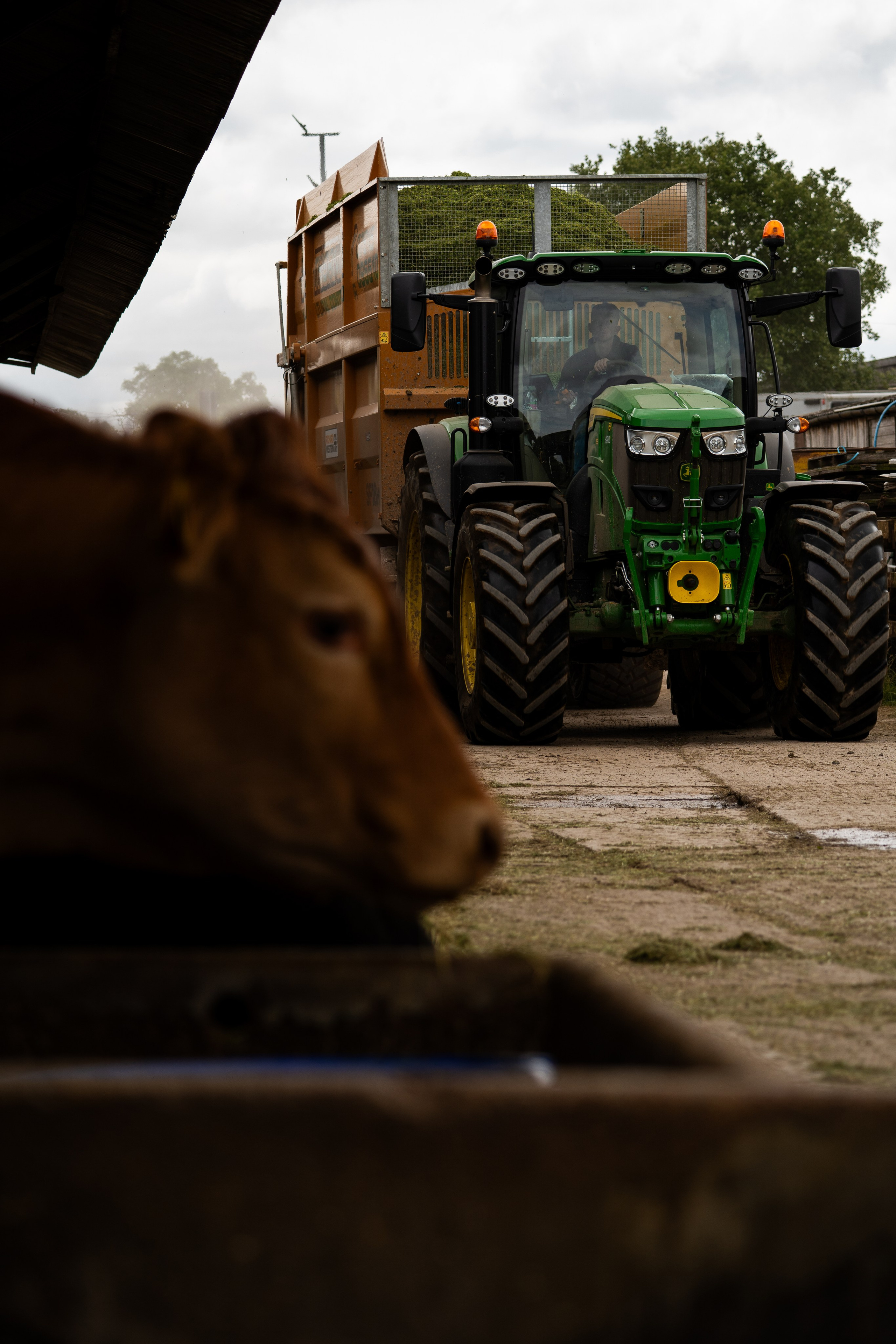
That cow in the shed is watching her winter dinner arrive.
Why it’s tough
- The weather decides everything. Grass needs a few dry days to be cut, wilted and gathered. One wet spell at the wrong moment can spoil it, so everyone watches the forecast closely.
- It all happens at once. Many farms use a contractor with a harvester, several tractors and trailers and a team of drivers. When the weather is right, they work from early morning until late at night to get it done.
- Timing is a balancing act. Cut too early and there’s less to store. Cut too late and the grass has gone stemmy and is less nutritious.
- It’s expensive. Fuel, machinery, contractors and plastic sheeting all add up. That cost is carried until the cattle are sold, sometimes months later.
Most farms take more than one cut a year. The grass grows back, and the whole process starts again a few weeks later.
Did you know?
The tractor driving on top of the clamp is one of the most important jobs of the day. Every pocket of air left in the heap is a spot where the silage can go mouldy. A well-packed clamp is something farmers take real pride in.


